
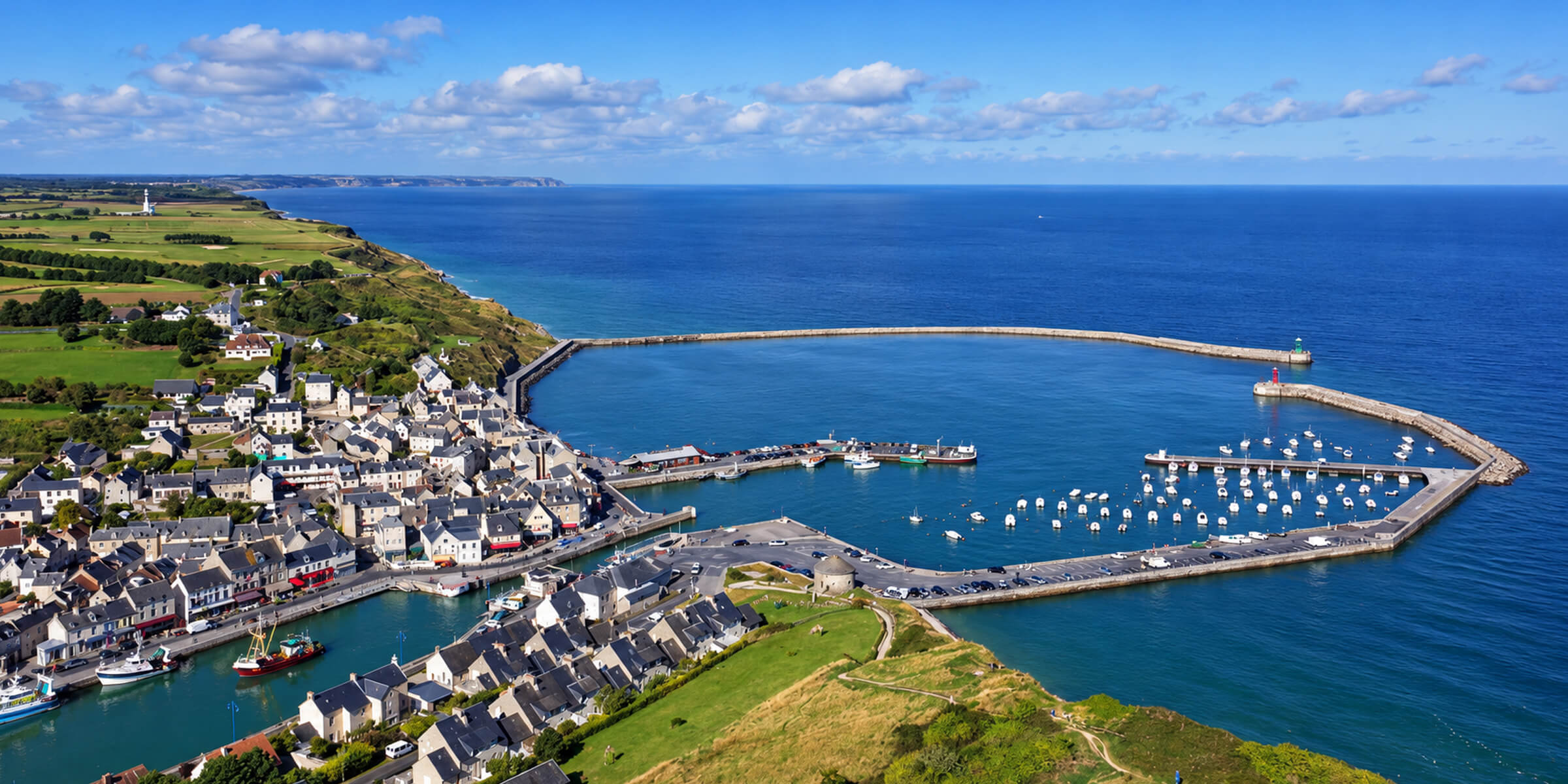
Destinationsin Normandy
Calvados, Eure, Manche, Orne and Seine-Maritime, towns and villages, the Alabaster Coast, Côte Fleurie, Cotentin, Pays d’Auge and Perche: Normandy area by area.
Guided tours in Normandy
On foot through old town centres, by little train around the towns, by boat to the islands: compare tours and book online.
Find a tourDestinations: your questions
What are the departments of Normandy?
Normandy has five departments: Calvados (14), Eure (27), Manche (50), Orne (61) and Seine-Maritime (76). Most of the coastline is shared between Seine-Maritime, Calvados and the Manche, while the Eure and the Orne are inland areas of countryside, forests and valleys.
What are the coasts of Normandy?
From north to south: the Alabaster Coast, from Le Tréport to Le Havre, the Côte Fleurie, from Honfleur to Cabourg, the Côte de Nacre, from Ouistreham to Courseulles-sur-Mer, then the D-Day beaches, the Cotentin and the west coast of the Manche down to the bay of Mont-Saint-Michel.
Which department should I choose for the seaside?
It depends on the scenery you want: chalk cliffs and shingle beaches in Seine-Maritime, sandy seaside resorts in Calvados, long beaches, dunes and headlands in the Manche. Of the 128 seaside beaches featured on this site, 77 are in the Manche.
Which department is Mont-Saint-Michel in?
In the Manche, at the far end of the bay of the same name, which also borders Brittany. The nearest station, Pontorson-Mont-Saint-Michel, is about 9 km away, with a connecting coach to the Mount.
Which town makes a good base for visiting Normandy without a car?
A town with a railway station: Rouen, Caen, Bayeux, Le Havre or Cherbourg. Nomad trains link them, and regional coaches serve the coast. Inland areas remain poorly served by public transport.